Top-rated independent appliance repair across the Midwest
The Coil-Cleaning Habit That Saves Refrigerators
If your fridge is running longer than it used to, start by checking the condenser coil, and call us if cleaning it doesn't help. The kitchen feels warm near the fridge, ice cream is soft, nothing has broken yet. Nine times out of ten we find the same thing: a condenser coil packed with dust, pet hair, and lint. It's the cheapest problem in your kitchen to prevent, and one of the more expensive ones to ignore.
Call (800) 967-1507- Real people on the phone
- 7 days a week
- Quote in writing before any work
Taking calls until 5:00 PM CT
Written by the Steve's Appliance Repair service team and checked by our field technicians
What the dust is actually doing back there
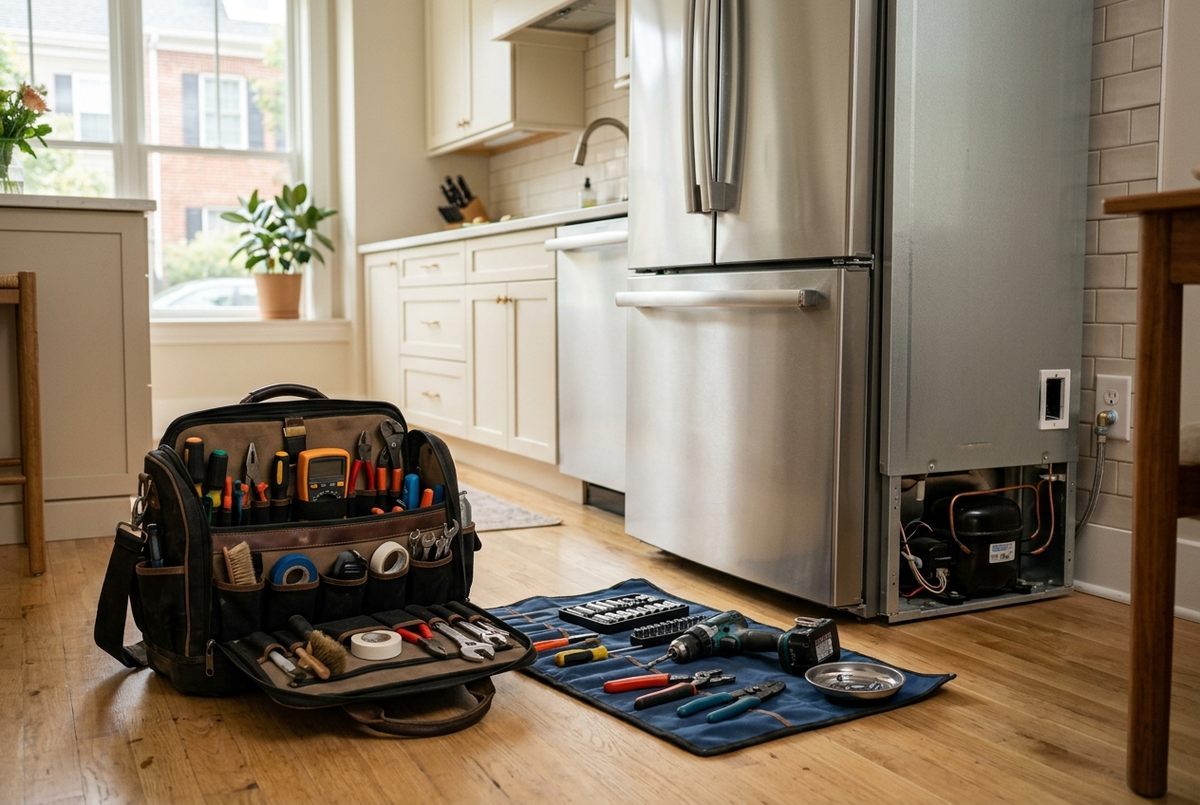
The condenser coil is how your fridge dumps heat, and air has to move across it. When dust and pet hair blanket those coils, heat stays trapped in the system. The compressor keeps running because the box never reaches temperature. Run times stretch from minutes to hours. That extra heat cooks the compressor's windings and puts stress on the start components. On a fridge that lives like this for years, we see failures a clean coil would have prevented. Basement and garage units load up fastest, along with homes that have a shedding dog. Kansas summers make it worse, because the room air is already warm before it ever reaches the coil.
The five-minute habit
Unplug the refrigerator. That's the whole safety step, and it isn't optional. Then find the coil. On most fridges it sits behind a snap-off grille at the bottom front, or out in the open at the lower back. You don't need tools, and you don't need to pull a screwed-on panel. Vacuum with a crevice tool or a long coil brush, working the dust out rather than pushing it deeper. Get the fan grille area too, if you can reach it without removing anything. Wipe the floor underneath, plug it back in, and listen. A quieter, shorter run cycle is what you want to hear.
How often, honestly
Twice a year covers most homes. We like spring and fall, since you're already thinking about the furnace and the yard. If you have a shedding pet, make it every three or four months. Pet hair mats into a felt layer that air can't pass through, and it builds far faster than plain dust does. Basement laundry rooms and utility spaces add lint to the mix, and so does a fridge parked in the garage. If you've never done it and the fridge is more than a few years old, do it this week. Start the calendar habit after that.
Signs prevention time has already passed
Call us instead of cleaning if the fridge is warm while the freezer still works, or if the compressor runs and never shuts off. A click every few minutes with no cooling points to a start component, or a compressor that's straining. Frost building on the back wall of the freezer while the fridge side warms up is usually a defrost or airflow fault, not a coil issue. Water pooling under the crisper, a coil iced solid, hot cabinet sides: those all mean something inside needs a meter on it. Anything involving sealed lines or electrical components belongs to a technician rather than a vacuum.
When to hand it to us
We repair all major refrigerator brands as an independent shop, working out of Lawrence and across twelve Midwestern states. Bring us the small stuff: the model number off the sticker inside the fresh food door, what you hear, how long it's been going on, and whether the freezer still holds. That detail shortens the visit. We check run times, temperature split, airflow, and the parts that tend to fail after coils have been dirty a long while. Then we tell you plainly what it needs and what can wait. Call us and describe what your fridge is doing. We'll sort out whether it's a cleaning or a repair.
The Coil-Cleaning Habit That Saves Refrigerators — what people ask
Do I really have to unplug it first?
Yes. The condenser fan can kick on by itself while your hand is back there, and a vacuum hose near live terminals is a bad idea. Unplug the fridge, clean it, then plug it back in.
My fridge has no front grille. Where's the coil?
Plenty of models put the condenser on the lower back, either open to the room or behind a thin cover. Pull the fridge out gently, unplug it, and vacuum what you can reach without unscrewing anything.
Will cleaning the coils fix a fridge that's already warm?
Sometimes, if dust was the only problem. Give it 24 hours after cleaning, then check temperatures. If it's still warm, something else has failed and needs testing. Call us.
How it works
- Step 1
Tell us the symptom
Call us or fill out the form and describe what you hear, smell, or see. An error code helps. So does a puddle. We ask the brand and rough age so the van carries the parts we are likely to need.
- Step 2
We come look
Our technician tests the machine instead of guessing: water lines, heating elements, drain pumps, control boards. Then we explain what failed in plain words before any wrench turns.
- Step 3
Repair and clean up
Common parts ride with us, so a lot of repairs finish on that first visit. Special-order parts get scheduled right away. We run the cycle with you standing there, then haul off the old part and the packaging.
- A real person answers
- Open 7 days
- Written quote before work starts
Why homeowners call us
- Hard water is our specialtyMidwest water leaves scale on everything it touches. Crusted dishwasher spray arms. Clogged ice maker lines, and washers and water heaters full of mineral buildup. We know what that grit does to valves and seals, so we treat the cause instead of the symptom.
- Basement laundry roomsBasement setups fail differently than upstairs ones, between the long drain runs, the cold concrete, and lint packed into a vent that runs through the rim joist. We check the venting and the drain path too, not only the machine, so the same problem does not come back.
- Freeze-thaw season readyGarage freezers quit in January. Ice makers stop when the supply line freezes, and dryers labor when the vent hood ices over. Seasonal swings break appliances in fairly predictable ways, and those are the first things we look at on a winter call.
- Independent, all major brandsWe are not tied to any manufacturer, so we work on whatever is sitting in your kitchen or laundry room: refrigerators, ranges, dishwashers, washers, dryers, freezers. One shop, one call, whatever badge is on the door.
- All major brands, gas & electricIndependent service on Whirlpool, LG, Samsung, GE, Maytag, Bosch, KitchenAid and the rest.
- Straight answersIf it isn't worth repairing, we'll say so, often right on the phone.
About this guide
When the easy checks change nothing, it's time for a tech
Tell us what you tried and what it did. The booking itself takes a minute.
- A real person answers
- Open 7 days
- Written quotes
- All major brands
- Gas & electric
Rather not call? Get a free quote →